Basic Stitches Beginner
Single Crochet (sc)
The most basic crochet stitch, creating a tight, dense fabric.
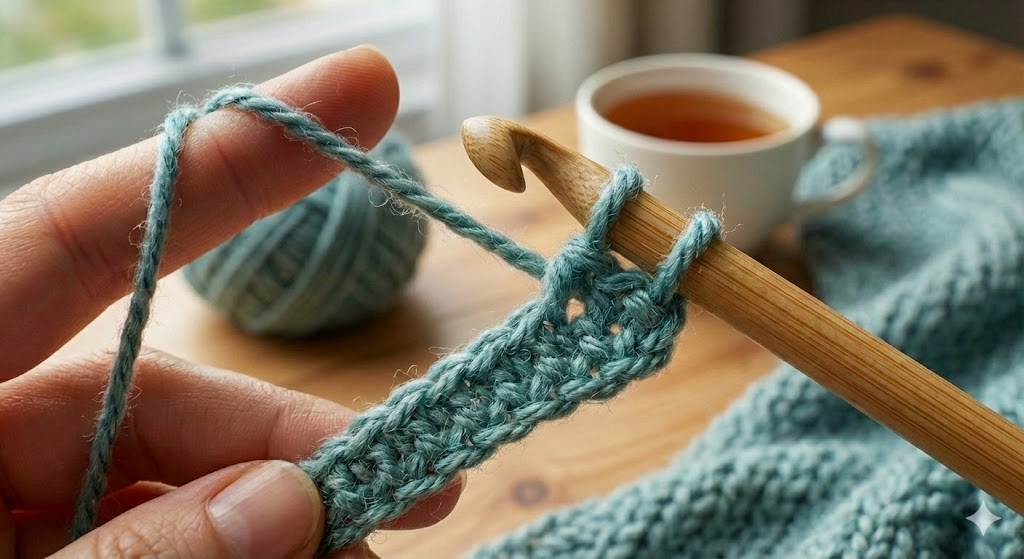
The single crochet (abbreviated sc) is one of the most essential and versatile stitches in crochet. It creates a short, dense, and sturdy fabric that is perfect for projects that need to hold their shape.
Characteristics
- Height: It is the shortest of the standard crochet stitches.
- Texture: Creates a solid, tight fabric with minimal gaps.
- Reversibility: The stitch looks very similar on both the front and back sides.
How to Work a Single Crochet
To work a single crochet into an existing row or a foundation chain:
- Insert Hook: Push the tip of your hook through the next stitch (or the second chain from the hook if starting a foundation chain).
- Yarn Over (YO): Wrap the yarn over the hook from back to front.
- Pull Up a Loop: Pull the hook and yarn back through the stitch. You should now have two loops on your hook.
- Yarn Over Again: Wrap the yarn over the hook again.
- Finish the Stitch: Pull the yarn through both loops on your hook. You have completed one single crochet stitch!
Starting a New Row
When you reach the end of a row and want to start a new one:
- Turning Chain: Chain 1 (ch 1). This provides the necessary height to start the next row.
- Turn Your Work: Flip the piece over so you can work back across the previous row.
- First Stitch: In most patterns, the ch 1 does not count as a stitch, so you will work your first single crochet into the very last stitch of the previous row.
Common Uses
- Amigurumi: Because of its tight tension, it’s the standard stitch for stuffed toys to prevent the stuffing from poking through.
- Dishcloths and Pot Holders: The dense fabric provides great heat resistance and durability.
- Hats and Scarves: Ideal for warm, wind-resistant winter wear.
- Edgings: Frequently used to create a clean, simple border on finished projects.
Pro Tips
- Counting Stitches: Single crochet can be hard to count because the stitches are short. Look for the “V” shapes at the top of the row to help you count.
- Tension: If your work is curling significantly, your tension might be too tight. Try using a slightly larger hook.
- Placement: Ensure you are inserting the hook under both loops of the “V” from the previous row, unless the pattern specifies “Front Loop Only” (FLO) or “Back Loop Only” (BLO).